
The UCI Greenhouse is a 10,000-square-foot growth facility that supports teaching and research needs for the School of Biological Sciences. The Greenhouse is divided into 15 growth areas that are individually programmable for temperature. Greenhouse Staff provides watering, pest management, and basic maintenance for plants used in research and teaching. Additional facilities include common-use lab space, a lath house adjacent to the Greenhouse for plants requiring ambient conditions, an autoclave for soil sterilization, and storage space for greenhouse supplies, which are provided by investigators.
To request space in the UCI Greenhouse, please fill out the form below and send the completed document to jrodart1@uci.edu. Please also review the greenhouse user guidelines and the pesticide safety contract that are linked below.
Greenhouse Projects

Dr. Catherine Loudon Lab
Dr. Catherine Loudon and collaborators are working on technologies for trapping pests, such as bed bugs, based on the insect-trapping abilities of leaves from bean plants. They grow the plants in the UC Irvine greenhouse, and harvest the leaves for experiments. This approach is under development for a non-chemical method for pest control.
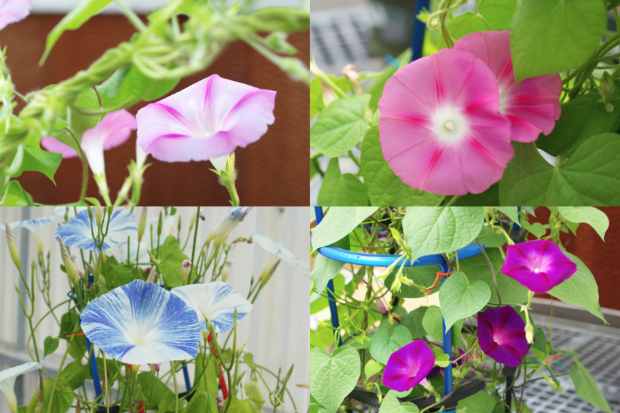
Karen Campos, Martin Lab
The Martin Lab studies anthocyanin pigmentation in different species of flowering plants. We discover the unique patterns of glycosylation and acylation that contribute to the vibrant blue, purple, and pink pigments in Ipomea species grown from seed at the UCI Greenhouse!
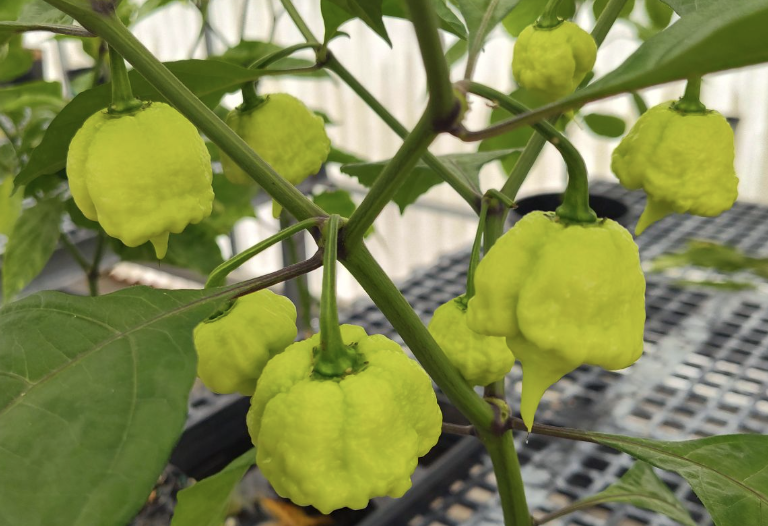
Benjamin Katz, Mass Spectrometry Facility
Ben cultivates specialized crops such as hot peppers and buzz buttons to study how environmental and chemical stresses affect plant chemistry. Using mass spectrometry-based metabolomics and proteomics, Ben investigates how changes in enzyme profiles affect bioactive compounds. This research supports the development of natural product and food safety applications.
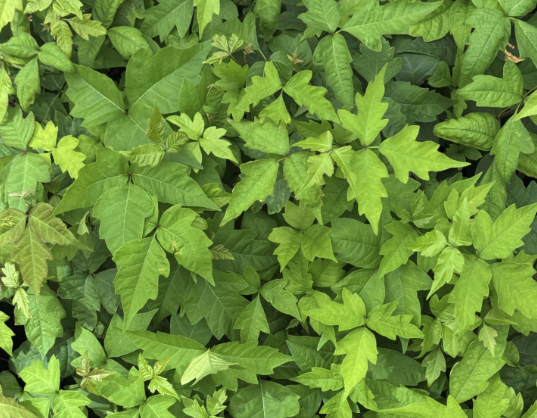
Genevieve Belleveau, Claire Trevor School of the Arts
Genevieve is an art MFA candidate cultivating a patch of poison ivy, Toxicodendron radicans, as a site for embodied and conceptual research. Her project investigates human engagement with risk, contamination, and interspecies relation. It situates the plant as a co-participant in an intuitive study of affect, collective memory, and the psychoanalytic framework of traumatophilia.
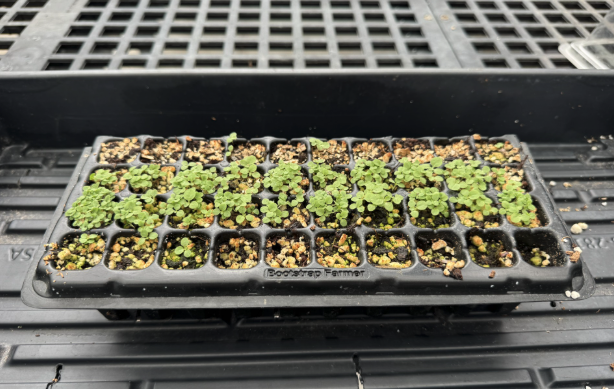
Jason Saathoff, Haun Lab
Jason is studying how tobacco protoplasts may be used in an assay to detect tobacco mosaic virus within seed samples. Current detection methods take weeks to determine positive infection, meanwhile a protoplast based assay could achieve the same result in a single day. Jason is growing tobacco plants in the UCI greenhouse and harvests healthy leaves to isolate protoplasts from in his lab.
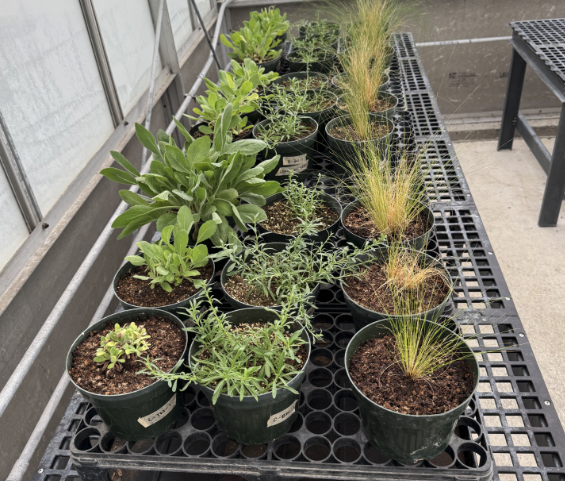
Michelle Kirgan, Olivares Lab
Michelle tested the ability of three native California plants, California telegraph weed, California buckwheat, and purple needlegrass, in the remediation of lead contaminated soils from the city of Santa Ana.
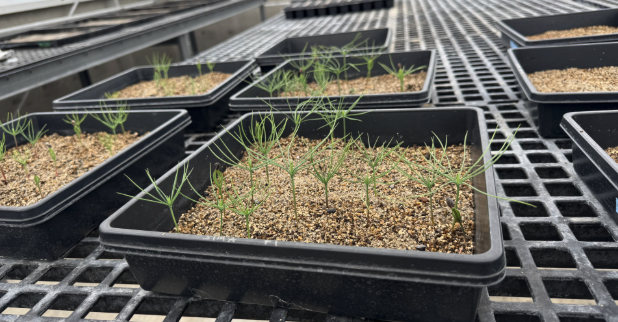
Phoebe Hagberg, Treseder Lab
Phoebe is investigating the role of mycorrhizal fungi in plant establishment under various climate conditions.
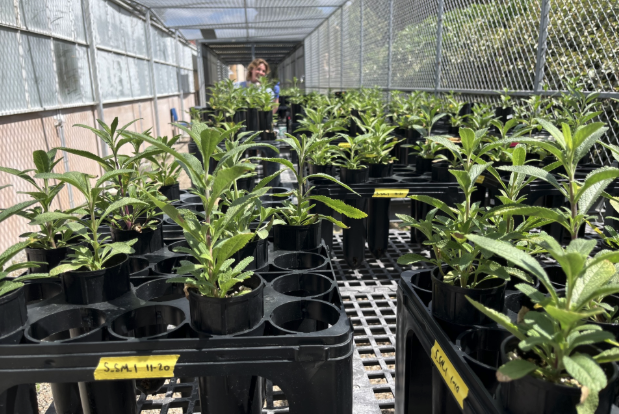
Natalie Cokel, Martiny Lab
Natalie is growing black sage as part of a restoration effort in Crystal Cove State Park. Natalie is interested in how soil- and leaf-associated bacteria impact plant fitness and is assessing the ability of these microbiomes to aid in the restoration of native plants.
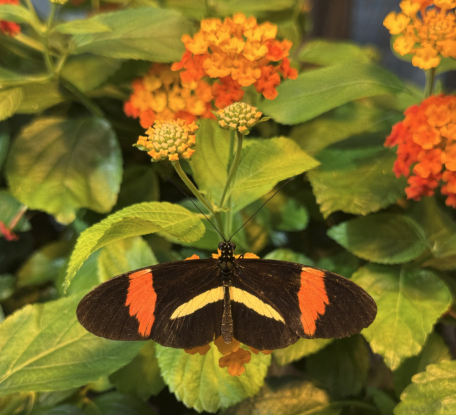
Dr. Adriana Briscoe Lab
Adriana Briscoe’s lab studies the evolution of wing coloration and color vision behavior in butterflies. Heliconius are one of the groups of butterflies her lab investigates in UCI’s greenhouse. Heliconius adults are usual among butterflies in that besides feeding on nectar from flowers, they also feed on pollen, which they collect and digest extraorally on their proboscis. Pollen feeding greatly expands the life span of adult Heliconius butterflies from a few weeks to over 90 days and permits females to lay many more eggs than they would have the resources to produce without pollen.
Get in Touch
If you have any questions about the UCI Greenhouse, please contact:

Celia Faiola, PhD
Greenhouse Director
Steinhaus Hall 463
(949) 824-2061
cfaiola@uci.edu

Javier Rodarte
Greenhouse Manager
Building 514, Room 102
(949) 824-6049
jrodart1@uci.edu